Corno de Bico Protected Landscape · Paredes de Coura

The wildcat of Corno de Bico.

BRAVO looks for the European wildcat in the hills of Paredes de Coura, in northern Portugal: where it lives, whether its lineage remains pure and what threatens it. And it invites the people who live here to help.
Projeto BRAVO seal: a stalking wildcat with its thick ringed tail
Species
Felis silvestris Schreber, 1777
Status in Portugal
Endangered (EN)
Protection
Habitats Directive, Annex IV
Pilot study
12 months, 2026-2027
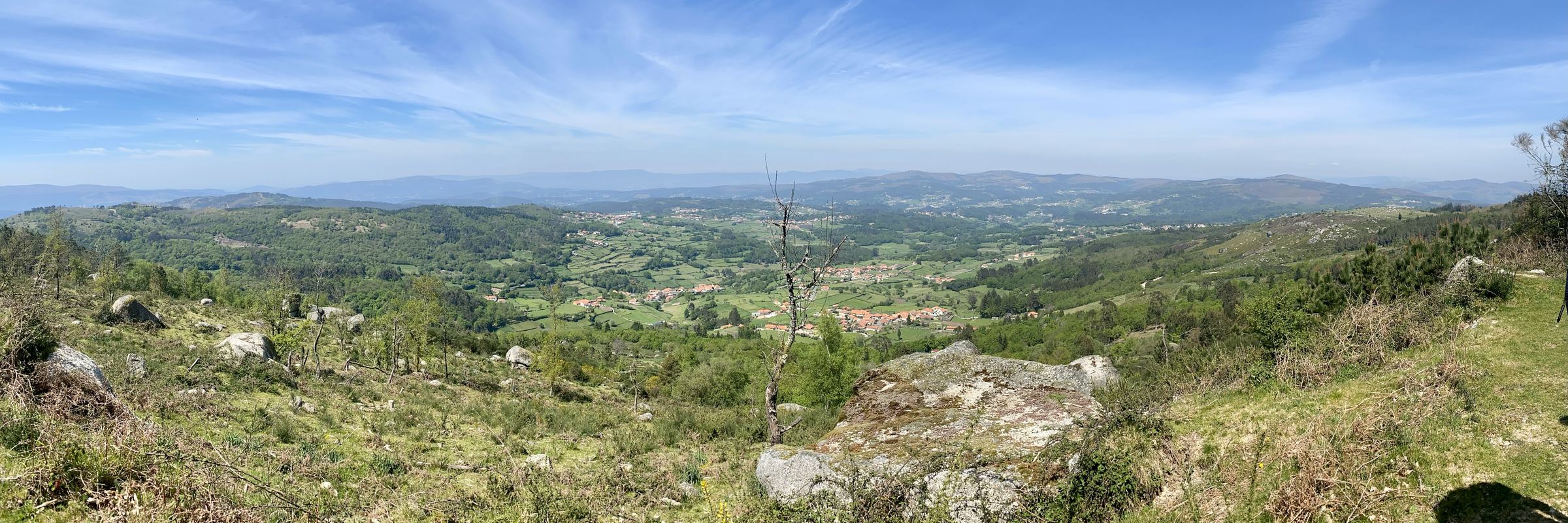
Panoramic view from Corno de Bico: scrub and granite outcrops in front, villages and farmland in the valley
Corno de Bico Protected Landscape. Woods and scrub reach the villages of Paredes de Coura.

Recognise

It looks like a cat.
It is no ordinary cat.

The wildcat is the only wild feline in northern Portugal. From a distance it passes for a striped house cat, but the tail gives it away.
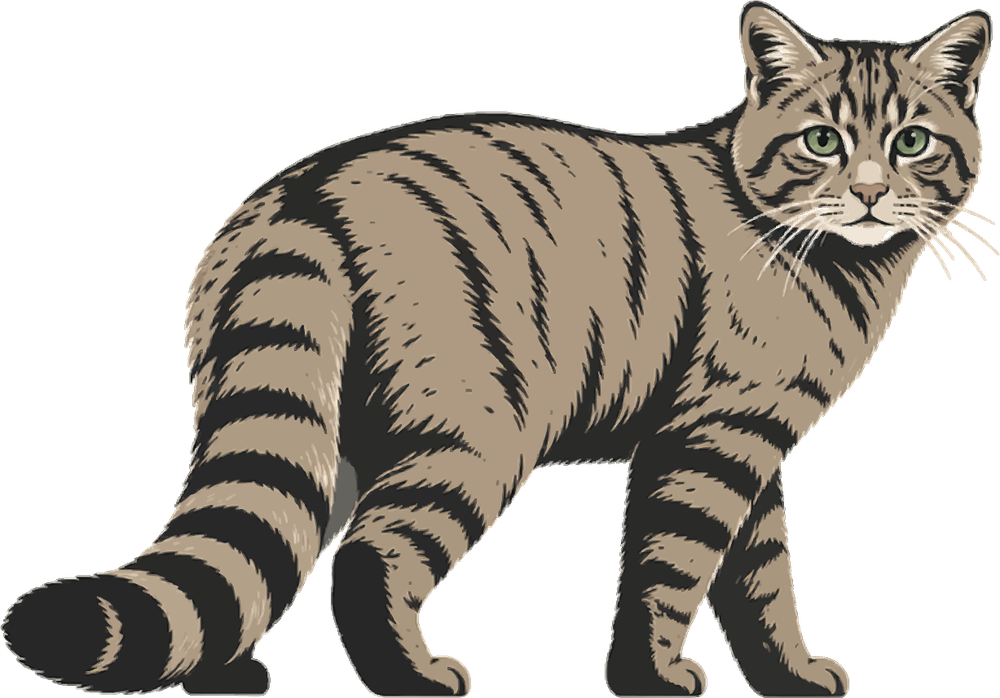
Illustration of a wildcat with seven numbered points on the coat markings that identify it
  1. Blunt, black tail tip that does not taper.
  2. Distinct black tail rings that do not merge.
  3. Black dorsal stripe that stops at the base of the tail and does not run along it.
  4. Four thick, wavy stripes on the nape.
  5. Two thick stripes on the shoulder.
  6. Unbroken stripes on the flanks, with few or no breaks.
  7. No spots on the flanks or hindquarters.

Coat criteria from Kitchener et al. (2005), Animal Conservation 8: 223-237, used by the Saving Wildcats programme in Scotland.

BRAVO / RECOGNISEWildcat or house cat?WildcatFelis silvestrisStriped house catFelis catus1Thick, roundedblack tip2Distinct, separateblack rings3Dorsal stripe stopsat the tail base4Unbroken stripes,no spots1Thin, taperingtail2Rings and patternsvery variable3Dorsal stripe mayrun along the tail4Broken stripes or spots;white patches commonOnly genetics can confirm it. Some hybrids look like wildcats: judge the whole set, not one feature.Coat criteria: Kitchener et al. (2005), Animal Conservation 8: 223-237.

Wildcat Felis silvestris

  1. Thick, rounded black tip
  2. Distinct, separate black rings
  3. Dorsal stripe stops at the tail base
  4. Unbroken stripes, no spots

Striped house cat Felis catus

  1. Thin, tapering tail
  2. Rings and patterns very variable
  3. Dorsal stripe may run along the tail
  4. Broken stripes or spots; white patches common

Only genetics can confirm it. Some hybrids look like wildcats, so the team checks every photo you send and, where possible, matches it with hair samples.

How you can help

Three things anyone
in Coura can do.

Recognise

Learn to tell it apart

Thick tail, black rings, blunt tip. Knowing it is the first step to protecting it.

See the differences
Care

Look after your own cat

A neutered, vaccinated and microchipped cat does not breed with wildcats or pass diseases on to them.

Read more
Report

Tell us what you saw

A sighting, a photo, a road-killed animal. Every record helps us map the species in the region.

Report now

How we work

Science without
touching the animal.

Camera traps and valerian-scented hair stakes record wildcats as they pass. The hair left on the velcro gives us DNA, with no capture or handling.

How we protect animal welfare
30stations, each with a camera and a hair stake
8months of continuous fieldwork
0wildcats captured or handled
3campaigns with schools, parishes and local events

News

Field diary

What we are doing in the field, in the lab and with the community.

All news


BRAVO at the EUROWILDCAT meeting

Three days in Scotland with the teams studying wildcats across Europe. We brought ideas home for Corno de Bico.

Read more

The pilot study begins

Contract signed with the Municipality of Paredes de Coura and method submitted to ICNF and CCDR Norte.

Read more
Co-funded by
NORTE 2030, Programa Regional do NortePortugal 2030Cofinanciado pela União Europeia
An initiative of
Município de
Paredes de Coura
Universidade LusófonaEscola de Psicologia e Ciências da Vida, Universidade Lusófona